
Story & photos by Stephanie Schupska

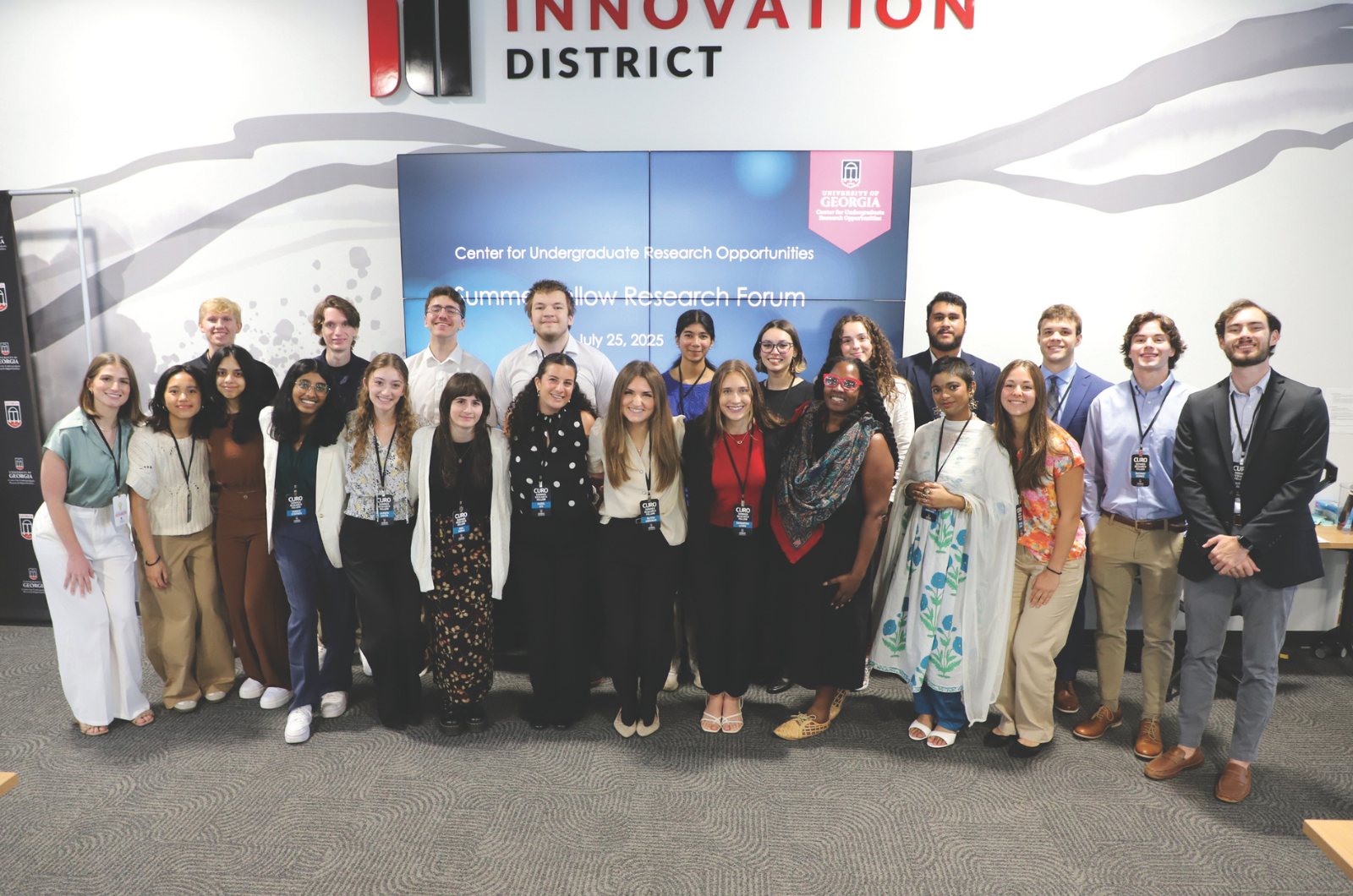
CURO Summer Research Fellows gather at the Innovation District for their end-of-summer research forum, where they presented findings from ten weeks of full-time, faculty-mentored research across fields ranging from music therapy to physics education.
Each summer, a small group of undergraduates gain their research footing at the University of Georgia through the CURO Summer Research Fellowship. Over the shortened semester, 24 students spend 40 hours a week delving into a range of topics, including music therapy, biotechnology, physics education, psychology, anthropology, mechanical engineering, health promotion, and fabric design.
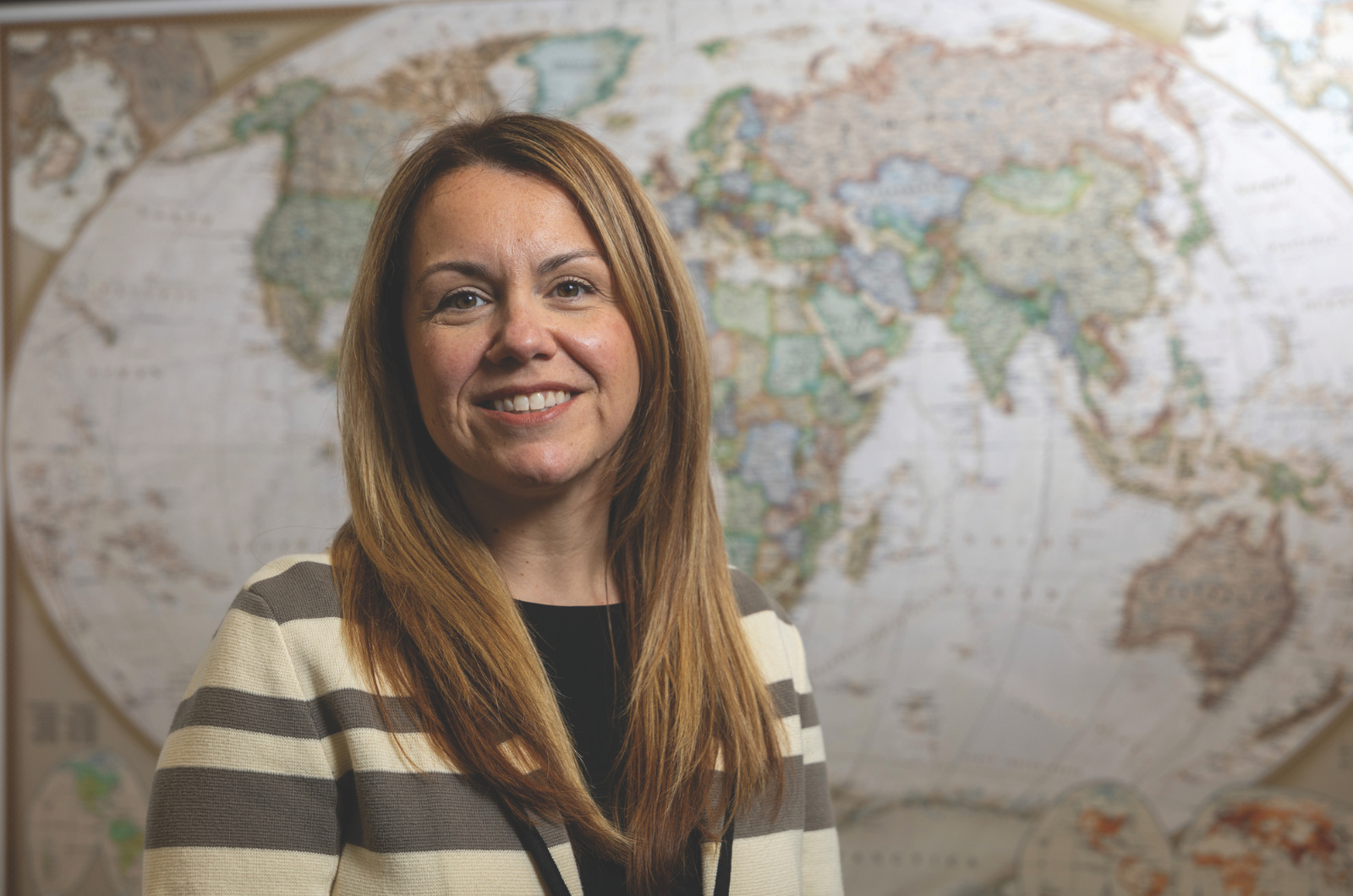
The goal is to build a community of students who learn from each other while exploring career options in research, according to Andrea Silletti, program coordinator for the Center for Undergraduate Research Opportunities.
“We build our workshops and activities around helping our students make the most of their summer of research and learning,” Andrea said. “There are always so many great projects, and I enjoy meeting our students each summer and learning more about their research.”
CURO supports the development of future researchers by creating pathways for students to engage in meaningful experiences. A $3,000 scholarship helps cover summer expenses, and students build a cohort through workshops and events. They are required to work 320 hours between May 1 and July 31 on immersive faculty-mentored research.
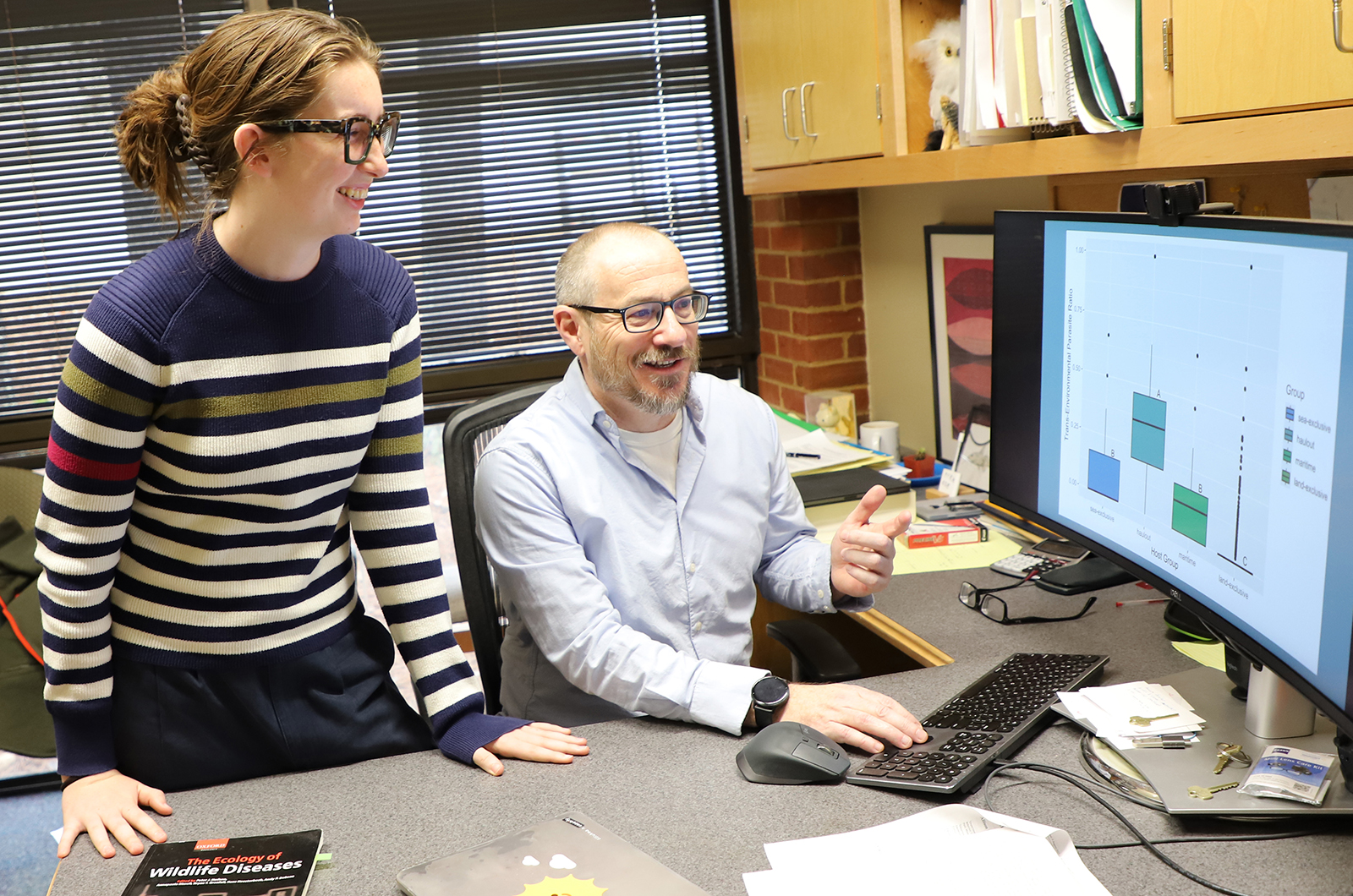
“CURO remains one of the best tools at UGA for inspiring undergraduates to work in our research laboratories, work in teams, and develop new skills,” said faculty mentor Brandon Rotavera, an associate professor in chemistry and engineering who guided Samantha Lewis, a biochemical engineering major, through her summer fellowship.
As the students began their summer of research, Andrea helped the cohort get to know each other through an ice cream and icebreaker session. Workshops throughout the semester covered communicating and presenting research, writing personal statements and resumes, and considering a career in research. They featured UGA faculty and staff from the Career Center, Active Learning, Willis Center for Writing, Health Center, and Morehead Honors College.
At the end of the summer, students, family members, research mentors, Honors staff, and other UGA employees gathered for a day-long forum. Summer fellows presented their findings either through a 10-minute presentation or during a lunchtime poster session.
“The forum presents an excellent opportunity to hear about the remarkable research being conducted by our undergraduate students,” said James Warnock, associate dean of the Morehead Honors College. “I am consistently astounded by the diverse range of research projects being undertaken and the remarkable advancements our students achieve in a relatively short span during the summer.”
Each March, the process begins again as a new group of students submit their applications, faculty mentors give their approval, and CURO staff select summer fellows. Between 20-30 CURO Summer Research Fellowships are awarded each summer depending on the availability of funding and faculty mentors.
HANIF ZAMAN
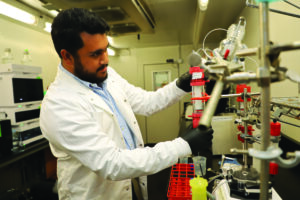 Majors: Biochemistry & molecular biology, philosophy
Mentor: Dr. Camilo Perez, assistant professor, Department of Biochemistry and Molecular Biology, Franklin College of Arts and Sciences
Additional co-authors: Eric Céster Díaz, graduate assistant; Isaac Kiefer, undergraduate researcher
Study title: “Optimization of LicD2 Expression and Purification”
What that means: Hanif studied a protein found in pneumonia with the goal of finding ways to make the disease less harmful.
Hanif spent the summer working as a molecular architect in Camilo Perez’s structural biology lab. Housed inside the Davidson Life Sciences Building on South Campus, it’s a space Hanif is very familiar with. He has been working with Dr. Perez since fall 2024, first studying proteins in Streptococcus mutans, a bacteria that causes tooth decay and can lead to other serious health problems.
His protein of study for summer 2025 was Streptococcus pneumonia, a bacteria that causes pneumonia.
“The protein I’m looking at is a part of a pathway that makes this bacteria harmful to us, that gives this bacteria its pathogenicity,” he explained. “By understanding how this protein works, we can maybe determine whether or not taking out this protein would be enough to nullify the bacteria.”
The Perez lab studies the mechanistic biology of cell wall assembly and membrane proteins. With bacteria like S. pneumonia, their goal is to understand how a tiny protein within a tiny bacteria works. Scientists down the road can then use their research to help discover and develop new medicines, vaccines, and other therapies.
“Early participation in research courses plays a critical role in the development of undergraduate talent, as it exposes students to hypothesis-driven research, data analysis, and scientific communication,” Dr. Perez said. “Hanif is one of those exceptional students who, through his enthusiasm and dedication, has fully embraced the research opportunities at UGA and has grown remarkably as a young scientist. Working with him has been a highly rewarding experience for everyone in my lab.”
Hanif works at one of the early starting points in drug development through his research. And he moves all over the lab in his quest to discover more about this S. pneumonia protein. He’s pipetting, adjusting expensive equipment, pulling vials out of a centrifuge, working with columns, and analyzing 3-D structures on a computer. It’s that last piece, a 3-D structure built using an artificial intelligence program called AlphaFold, that he shares during his end-of-summer presentation.
“AlphaFold recently won a Nobel Prize because it’s just so amazing,” Hanif said. “AlphaFold has taken studies that usually take years to do and brought it down to months. Basically, we give it a protein sequence, and it predicts the gene’s structure. The structure itself is not perfect; it’s a prediction. But by using it, we have a clear idea of what the protein may do. And from there, we can start to tailor our experiments and tests toward taking the prediction that it gives us and making it reality.”
Hanif credits the CURO Summer Research Fellowship with giving him the opportunity to work full-time in the Perez lab and to “dive into what research is and being able to do a lot more of it,” he said.
He continued his research on S. pneumonia and S. mutans into the fall and spring semesters. His plans after graduation include medical school and possibly an MD-PhD program.
“I really want to weave research both into my studies in med school and how I approach patients in the future,” he said. “I want to offer the newest technologies to really help people out.”
LAUREN SMITH
 Majors: Music therapy, psychology
Mentor: Dr. Ellyn Evans, associate professor of music therapy, Hugh Hodgson School of Music
Study title: The Effects of Live Versus Recorded Music on the Engagement of Adults with Intellectual and Developmental Disabilities in Music Therapy
What that means: Lauren studied participation of adults with intellectual and developmental disabilities during music therapy sessions
Lauren stands to the edge of the grass, clipboard in hand, as master’s student Celia Nolan strums on a guitar. She can feel the energy of the summer campers seated in front of her, but her role in the music therapy session doesn’t include drums or clapping or singing along. Her job is counting, recording the participants as they engage with the music.
The music therapy sessions are offered as part of a summer camp for adults with intellectual and developmental disabilities. By partnering with the Athens-based organization Extra Special People, UGA music therapy faculty are able to provide therapy for the ESP participants along with training for their students.
“Music therapy is using music to achieve non-musical goals,” Lauren explained. “Music touches so many different areas of the brain, and you can use music therapy for communication goals, motor goals, social goals, or emotional goals. It’s so all-inclusive.”
Lauren spent the summer working on a research project with Ellyn Evans, associate professor of music therapy, and Celia Nolan, her graduate assistant. Their goal was to see whether ESP participants would engage differently with live music versus recorded music.
As the undergraduate researcher, Lauren attended the outdoor therapy sessions with a pen, clipboard, and list of students. Every 45 seconds, she would look up, observe all of the participants—usually about 20 people—and record their engagement levels. This could range from active engagement (playing or trying to play an instrument) to passive engagement (facing the person playing music, making eye contact, smiling) to not engaged (looking off somewhere, not paying attention).
“What we’re looking at specifically is engagement,” Lauren said. “We’re looking at engagement as a form of communication for this population because a lot of them don’t have the verbal skills to communicate things like, ‘I like music therapy,’ ‘I like doing this,’ ‘this is fun,’ or ‘I enjoy this.’”
After recording a summer of therapy sessions and calculating the data, Dr. Evans and her team found a significant connection between live music and increased engagement when compared to recorded music and engagement.
“I’m so grateful to Dr. Evans for mentoring me through all of this,” Lauren said. “Her expertise has allowed us to contribute valuable research on an often-marginalized population, and we’ve actually been able to apply some of our findings in real music therapy sessions.”
Lauren’s journey to research started with a Café CURO, an informal coffee meeting held at locations around UGA’s campus. As a music therapy student focused on voice, guitar, piano, and percussion, she assumed she would need to do research in a field like psychology. By connecting with Andrea Silletti, Lauren discovered that if she could find a faculty mentor, she could do research through the CURO Summer Research Fellowship program.
Adding in the group approach of the CURO Fellowship made the experience “a great community, and I’m grateful to have had a cohort of people doing this along with me,” she said.
EUNICE STEPHEN
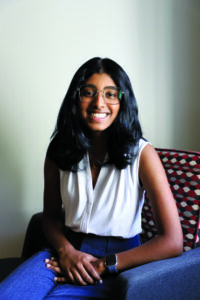 Majors: Genetics, applied biotechnology
Mentor: Dr. Kaixiong Ye, associate professor, Department of Genetics, Franklin College of Arts and Sciences
Additional co-author: Susan Adanna Ihejirika, doctoral student
Study title: “A Large-Scale Systematic Discovery of Gene-Diet Interactions Modifying the Impact of Dietary Habits on the Human Circulating Metabolome”
What that means: Eunice analyzed data to further study the connections between peoples’ genes, what they eat, and how their health is affected.
Eunice spent the majority of her summer studying the intersection of genetics, dietary intake, and different health outcomes. Since her sophomore year, she has worked in the lab of associate professor Kaixiong Ye.
She spends much of her day analyzing and coding health information collected through the UK Biobank, a database in Great Britain that collects genetic and dietary information—in addition to other metrics—on the more than 500,000 people involved in the research study.
“My research is related to food and to dietary interactions,” said Eunice, who graduated in May. She plans to pursue a doctorate in bioinformatics.
“Even when different people have the same diet, how food is metabolized works a little differently for different people,” she explained. “We’re looking at how genetics might affect why that happens.”
Eunice is focused on learning more about how genes affect something called circulating metabolites. These small molecules circulate in the blood and deliver nutrients to different parts of the body. Circulating metabolites are markers of health outcomes.
“This kind of research is important for personalized nutrition in the future because health care is going toward becoming more personalized,” she said. “This research helps us understand better how our genes affect our response to diet.”
Her research revolved around statistics, math, and data modeling as she looked for connections between diet scores and genotypes.
Eunice’s search for a summer-long research program started in her lab. A conversation with her mentor led to a suggestion that she look into the CURO Summer Research Fellowship. She decided to apply for the program because of the mentorship and workshops that came with it. She looked forward to meeting other student researchers in different fields.
Initially, the idea of 40-hour work weeks intimidated Eunice.
“I was kind of afraid the days would feel long because it’s so many hours per day, every day,” she said. “But I was surprised that once I got into it, I didn’t really feel time passing My research is in bioinformatics, and doing it full-time made me able to envision myself doing something similar in the future.”
When Eunice started working in Dr. Ye’s lab, she was just beginning to learn about coding and bioinformatics.
“It’s way more rewarding than I thought it was going to be when I started coding,” she said. “Being in the lab helps me understand more about what goes behind the research we talk about in class. It’s a lot of problem-solving. Those kinds of skills are widely applicable.”
Eunice also learned about academic writing. As she collaborates with Dr. Ye’s graduate students on a manuscript, she’s finding out how hard writing journal articles can be. She’s also finding out how fulfilling it is to put so much effort into something.
“I want to do grad school and get a PhD because I want a career in research,” she said. “This full-time experience really solidified for me that I really do enjoy it.”
JAMES SQUIRES
 Majors: Mathematics, physics
Mentors: Dr. Nandana Weliweriya, senior lecturer, physics and astronomy; Dr. Nicholas Young, assistant professor of physics, Franklin College of Arts and Sciences
Study title: Improving STEM Education by Predicting Classroom Performance via Statistical Learning Models Trained with Student Social Dynamics
What that means: James studied ways to improve physics education by researching ways to predict classroom performance through statistical learning models.
James stands at the front of a lecture hall in the physics building, rows of seats set stadium style stretching upward toward the back wall. The classroom holds just over 200 students, a typical size for an introductory physics class at a large university. His faculty mentors, Nandana Weliweriya, senior lecturer, and Nicholas Young, assistant professor, have tasked him with helping to find a way to improve STEM education by predicting student performance in a large classroom setting.
“The goal is to allow teachers to find ways to intervene for the at-risk students,” James said, which would let faculty members “predict student grades in large lecture classes early on, midway through the semester, with fair accuracies, because in a classroom this large, you’re not going to know everyone.”
Students taking a large section class need an introductory physics course because their major requires it. A typical student in one of these courses is majoring in engineering, biology, or a pre-med track. “Physics is important to them, but it’s not their main focus,” James said, sharing that he had been an engineering major before switching to mathematics and physics.
In a room of 20 to 30 students, a professor has the ability to go beyond sharing a lesson or concept. If a student misses several classes, the professor notices and can make sure they’re okay, James said. In a large class, where that’s not possible, engagement is very important for a student’s overall success.
The research James is conducting started in spring 2025, when 55 students participated in an initial survey. The students answered questions that asked about their highest level of prior experience with physics, their motivation to succeed in the course, their expected grade, the number of peers they had in the course, how many hours they studied with peers, and where they studied with peers. The researchers’ goal was to determine whether social behavior could predict grades.
“While other research has used academic information such as grades to predict future performance, few studies have included student social behaviors, too,” Dr. Young said. “James’s work fills that gap.”
As James processed the survey data, he looked for anything interesting, especially correlations between survey answers that might help indicate student performance. For example, he was curious to see whether a student’s motivation was connected to the number of peers they had in the class.
As he analyzed the data and developed algorithms, James spent time reading about statistical learning. He also tried different functions in Python, a programming language that can be used to examine data.
Over the fall 2025 and spring 2026 semesters, the research team continued to collect survey results from around 400 undergraduates, gathering data from students taking different sections of physics taught by different instructors.
“We’re scaling up the research as it goes,” James said.
CARSON KENNEDY
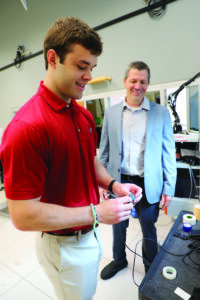 Major: Exercise sports science
Mentor: Dr. Christopher Modlesky, Athletic Association Professor of Kinesiology, Mary Frances Early College of Education
Additional co-author: Dr. Alessandra Bento Matias, postdoctoral associate and research coordinator
Study title: Investigating the Neuromuscular Connection in Children with Cerebral Palsy
What that means: Carson studied the link between brain activity and leg muscle movements in children with cerebral palsy
PEYTON MACIK
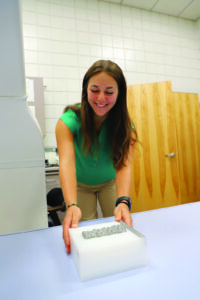 Major: Biomedical physiology
Mentor: Dr. Christopher Modlesky
Additional co-author: Shelley Jakiel, graduate research assistant
Study title: Evaluating the Relationship Between Loading Rates and Areal Bone Mineral Density in Children with Cerebral Palsy During Gait
What that means: Peyton studied how heel-to-toe movement in children with cerebral palsy is correlated with bone development in the thigh.
Carson and Peyton spent the summer in a spacious kinesiology lab on the second floor of the Ramsey Student Center, sorting data and examining study results under the mentorship of Christopher Modlesky, Athletic Association Professor of Kinesiology. His lab, the Neuromusculoskeletal Health Laboratory, is researching musculoskeletal health in children, particularly those with cerebral palsy, and working on treatment strategies to increase their physical activity while combating bone and muscle deficits.
Cerebral palsy, the most common childhood motor disability, results from brain damage and involves paralysis or partial paralysis, muscle weakness, and loss of movement, Carson explained.
The damage to their brains occurs around birth, and children with cerebral palsy move differently than children without the condition. Carson worked to understand how the children’s lower limb muscle activity connects to their blood oxygenation patterns in the brain, while Peyton investigated how movement affects bone mineral density.
Their projects were part of a larger study of 88 children, including those with cerebral palsy and typically developing control children, matched by age and sex. The trials, held from spring 2019 to winter 2024, involved participants ages 5 to 11 years old.
“We are so lucky to have excellent students like Carson and Peyton contribute to our research focused on children with cerebral palsy, especially considering their interest in the medical field,” Dr. Modlesky said. “There is a great need for more physicians and other clinicians who can help manage the care of children and adults with cerebral palsy in Georgia and the U.S. Including undergraduate students in our research also provides valuable mentorship opportunities to our postdoctoral and graduate researchers.”
Carson’s project:
“This summer, I was looking at neural activity in children with cerebral palsy and trying to find a relationship between that and their lower limb muscle activity,” Carson said.
Children with cerebral palsy often have abnormal muscle tone—either stiff and tight or relaxed and floppy. In his research, Carson was looking for a link between the children’s brain blood oxygenation patterns in their prefrontal cortex and their muscle activity. The prefrontal cortex oversees primary functions such as planning, strategy, and executive decision making; is responsible for motor planning; and contributes to evaluating and predicting outcomes, he explained during his final presentation. Establishing a connection could help physicians and physical therapists find better strategies to treat and strengthen the children’s muscles to allow them to move more easily.
Carson’s primary job was to process the data collected from study participants. Each child had gone through a series of activities, like stepping up on a block or walking in a certain area, and sensors attached to their bodies marked their movements.
The data from 15 children with cerebral palsy were matched to data from 15 typical developing children who had similar characteristics, such as age and sex. Carson looked at prefrontal cortex activity related to a progressive lateral step-up test, which had the participants first step on a flat surface. Then, with one foot steady on a block, they would use their other foot to step on and off the block, which measured either 3.9 inches (10 cm), 5.9 inches (15 cm), or 7.9 inches (20 cm) in height.
The study found that children with cerebral palsy employ different muscles than typically developing children and also lock their knee joints for greater stability while stepping up. Their brains also activate differently.
Peyton’s project:
Peyton’s research was guided by her classroom studies on bone physiology, particularly a concept she learned called Wolff’s Law. The concept explains the more healthy stress people put on their bones, the stronger their bones will be. Children with cerebral palsy often have weaker bone mineral density because they put less stress on their bones.
“Often, the goals of physical therapists and clinicians is to increase bone health in these children because that will also help decrease the risk of osteoarthritis, osteoporosis, and fractures,” she said. “It will also generally help increase their physical activity levels and their quality of life.”
Peyton examined participants’ gait, or how a child might move through the motion of walking. Gait involves two main forces: 1) a heel strike, when the heel touches the ground, or, for this study, touches a force plate, and 2) toe off, which happens right before someone shifts their weight to their other leg. She studied how those forces correlate to bone mineral density at the knee.
Her study included 28 children, or 14 matches, which was a subset of the larger study of 88 children.
“There’s so much instability in children with cerebral palsy, and if a participant had both feet touching the same force plate, we can’t use their data,” she said. “A lot of times they would have to take like 11 or 12 gait trials because you have to get one clear footfall to have that data be usable.”
The study found that while both groups of children put significant force on their heels when they landed on the ground and when they pushed off with their toes, or toe-off, the difference in the forces in children with cerebral palsy was much larger than in the control children. In addition, the lower force generated during toe-off was related to low bone mineral density in children with cerebral palsy. The results could guide gait therapies, helping patients to improve their rate of force during toe-off, which could help support their bone strength over time.
Impact of research:
 Carson was touring colleges when his neighbor from north Atlanta offered to show him around his lab at UGA.
“I loved it, and I decided to go to UGA that day,” he said. “I wanted to get into research after seeing all the stuff he did.”
Carson plans to go into medicine, and Peyton plans to become a physician assistant. They were interested in continuing their undergraduate research, for the experience and to help them as they apply to medical and PA schools.
The reason Carson and Peyton chose summer research came down to their mentors in the lab, particularly postdoctoral associate Alessandra Bento Matias and graduate research assistants Shelley Jakiel and Simin Rahman.
“They work with us, and they are so willing to help us on the projects,” Peyton said.
Carson agreed. “We enjoy the lab so much because of the Ph.D. and master’s students who make it a lot of fun.”